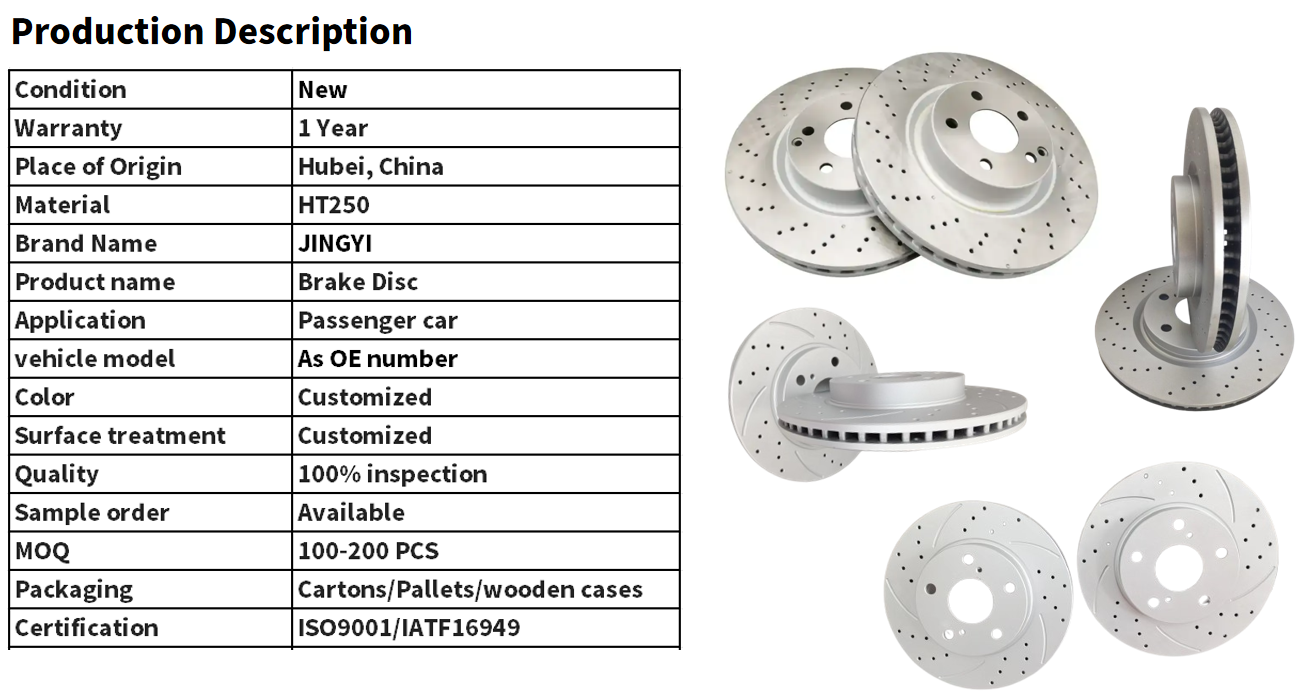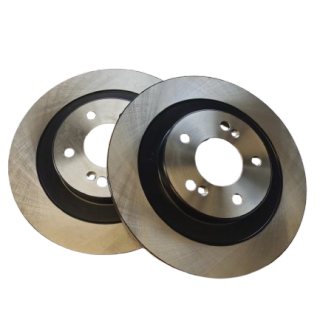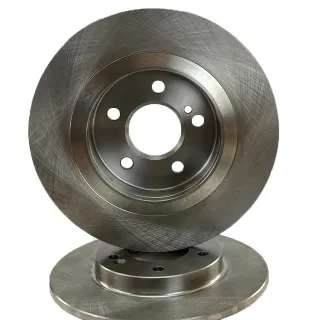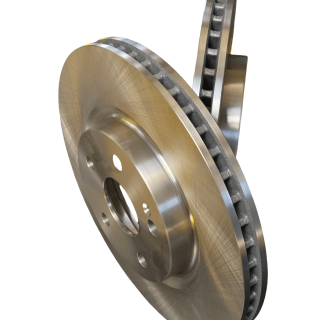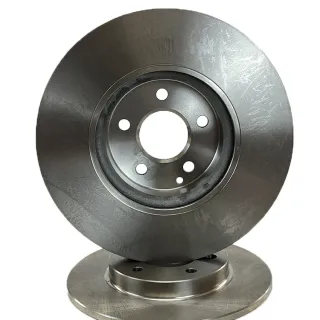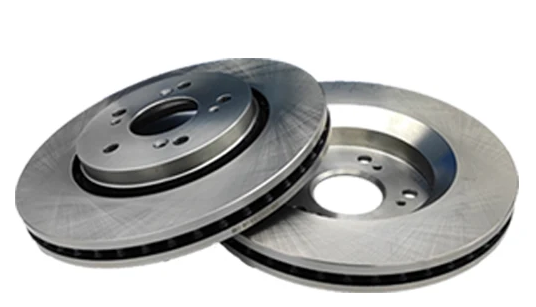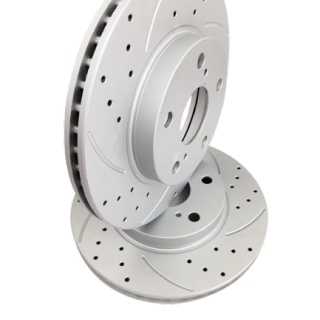
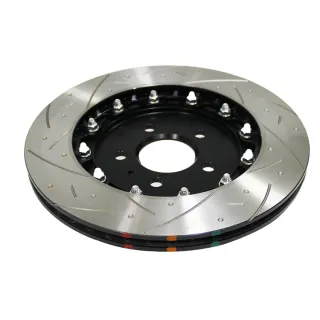
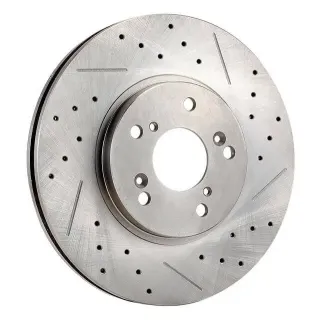
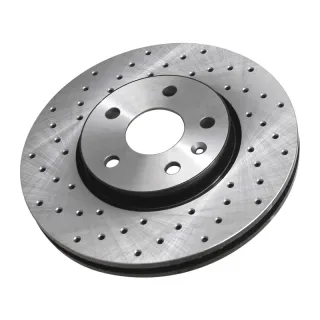
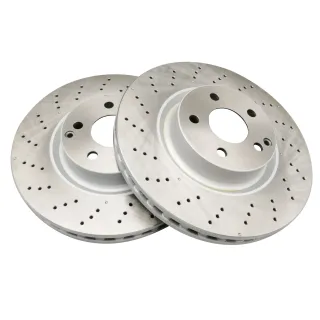
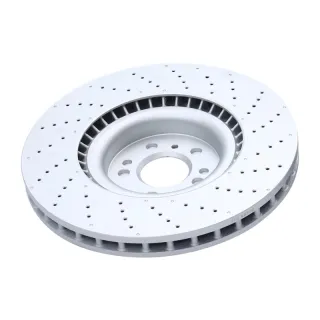
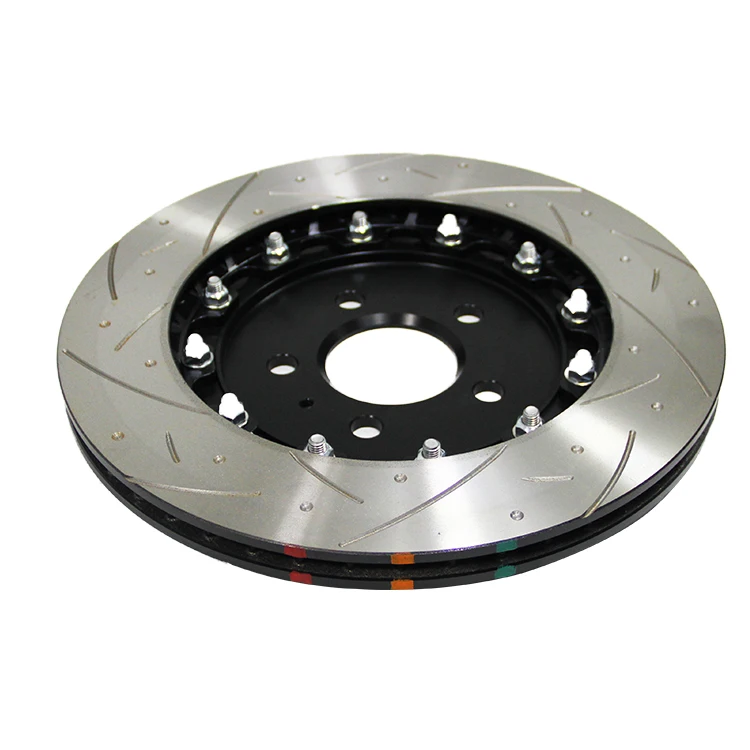
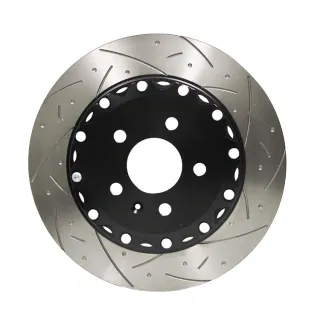
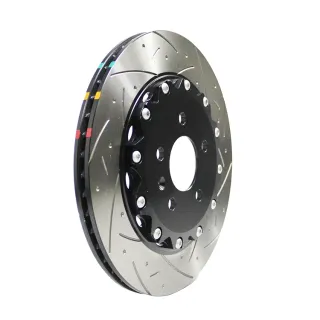
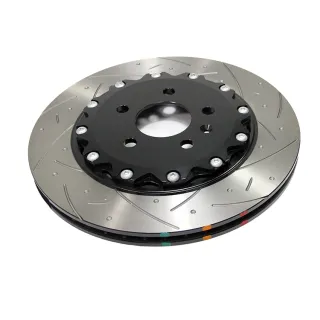
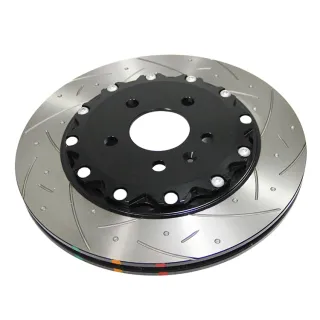
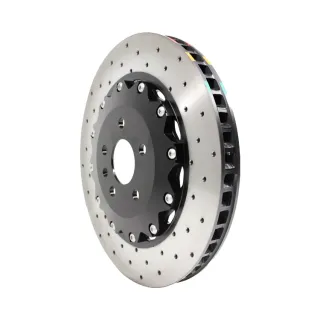
Most brake disc buyers focus on diameter and thickness. That's the baseline. But if your downstream customers are reporting inconsistent pedal feel, glazed pads, or premature disc wear — the rotor profile is almost always part of the story.
The wavy rotor brake disc — characterized by its contoured, non-circular outer edge — was engineered specifically to address these failure points. 13The wavy design increases airflow around the rotor, enhancing heat dissipation, and wave rotors typically weigh less than other styles, contributing to better handling. At Jingyi Brake, we manufacture OEM replacement wavy rotor brake discs at a foundry that has been casting automotive components since 1966, with 220,000+ tons annual output across two plants covering 470,000 m². Every disc ships with full IATF 16949 traceability — not a marketing claim, a documented fact.
1. What Is a Wavy Rotor Brake Disc?
A wavy rotor brake disc is a cast iron braking component featuring a scalloped or undulating outer edge profile, in contrast to the smooth circular perimeter of a standard disc. The "wave" geometry is not cosmetic — it serves three measurable engineering functions: improved airflow for heat dissipation, self-cleaning action to clear debris from the pad contact surface, and better accommodation of thermal expansion under sustained braking loads.
The non-round design enables better radial expansion of the rotor under extreme heat conditions, with other advantages including stable braking power in all conditions and outstanding responsiveness.
As an OEM replacement variant, this disc matches the original vehicle manufacturer's hub geometry, bolt pattern, offset, and minimum thickness specifications exactly. It installs without modification — no bracket relocation, no caliper shimming. OEM replacement brake discs are built to original equipment specifications and designed to match factory dimensions, thickness, materials, and mounting points precisely.
Key Definition — Wavy Rotor: A wavy rotor brake disc is a grey cast iron disc brake component with a non-circular outer edge profile. Unlike a standard flat-edge disc, the wavy perimeter increases the number of leading edges contacting the brake pad, improving initial bite response, promoting pad surface cleaning, and dissipating frictional heat more efficiently during repeated stop cycles.
→ View our full Brake Disc & Rotor product range
2. Wavy vs. Standard Round Rotor — Technical Comparison
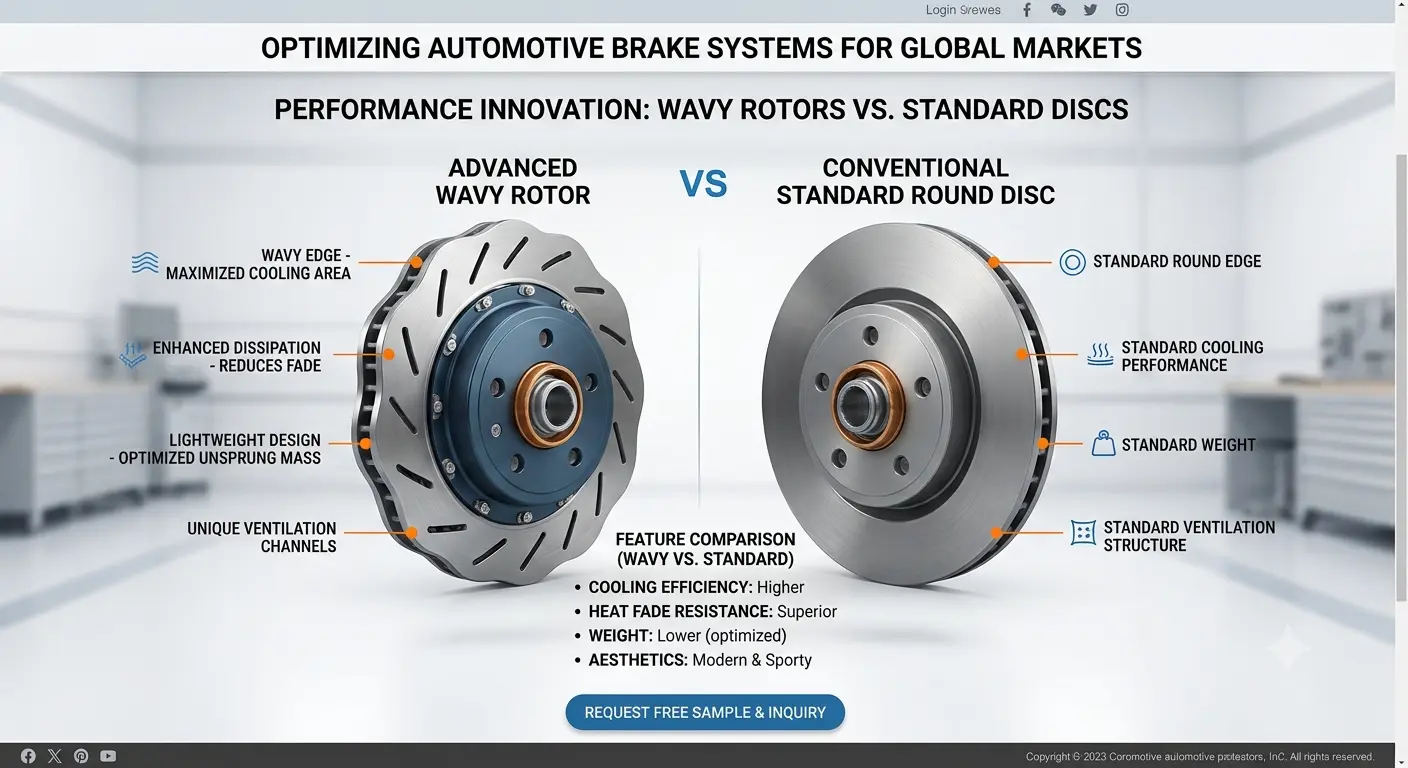
Here's where I need to be straight with distributors: the wavy profile is not a universal upgrade. It performs better in specific use cases. Specifying it for the wrong application won't deliver the results your customers expect.
The wavy design increases airflow around the rotor, enhancing heat dissipation, and the wavy edges help clear mud, dirt, and debris from the rotor, making them well-suited for demanding conditions. The rotor geometry also improves pad cleaning ability during operation — as the disc rotates, the wavy profile helps reduce glazing and debris build-up on the brake pads, supporting stable braking performance and effective pad contact throughout the service life.
That said — for light-duty rear axle applications with minimal thermal load, a standard solid disc often performs just as well and costs less to produce. I always recommend matching the disc profile to the application, not just the trend.
Wavy Rotor vs. Standard Disc — Side-by-Side
| Parameter | Wavy Rotor Brake Disc | Standard Round Disc |
|---|---|---|
| Outer Edge Profile | Contoured / scalloped wave | Smooth circular perimeter |
| Heat Dissipation | Enhanced — increased airflow at outer edge | Standard — relies on ventilation vane design |
| Pad Cleaning Action | Active — wave edges wipe debris each rotation | Passive — debris remains until braking clears it |
| Thermal Expansion Management | Better radial flex under high heat | Rigid — higher risk of thermal distortion in sustained use |
| Initial Brake Bite | Slightly sharper — more leading edges | Progressive — linear bite characteristic |
| Typical Applications | OEM fitment on performance-oriented platforms, SUVs, light trucks, vehicles in wet/dusty environments | Standard passenger vehicles, rear axles, low-thermal-load applications |
| Weight vs. Same-Diameter Standard | Marginally lighter due to material removal at wave profile | Full disc mass retained |
| Aftermarket Demand | High — especially EU, Middle East, Southeast Asia markets | Very high — widest coverage across all market segments |
| Pad Compatibility | Organic and semi-metallic recommended; verify with sintered pads | Compatible with all pad compounds |
| OEM Replacement Fit | Direct-fit per OEM specification | Direct-fit per OEM specification |
Recommendation: Always confirm the original factory rotor profile before specifying wavy or standard. Mixing profiles without application verification leads to brake pedal feel inconsistencies that come back to you as warranty claims.
SAE J431 — Automotive Grey Iron Castings Standard →
3. Material & Casting Specification
The performance ceiling of any brake disc is determined by its metallurgy. Profile and geometry matter — but if the iron spec is wrong, the disc warps, cracks, or loses friction consistency at operating temperature. I've seen buyers come to us after bad experiences where the competitor's discs looked identical on paper but the carbon content was simply too low for sustained braking cycles.
What We Use: Grey Cast Iron per SAE J431
Our OEM replacement wavy rotor brake discs are cast from grey cast iron conforming to SAE J431 G3000 specification — the standard grade recognized by North American and global OEM procurement teams for passenger vehicle brake discs and drums. Key metallurgical properties:
Carbon content: 3.2–3.5% total carbon (graphite flake structure provides the damping and friction characteristics that make grey iron the material of choice for brake discs)
Hardness: 187–241 HB — within the range specified by SAE J431 G3000, ensuring consistent friction coefficient and resistance to heat cracking
Tensile strength: ≥ 214 MPa
Material form: Flake graphite grey iron — the graphite flakes act as natural heat sinks, distributing thermal load across the disc cross-section
Production Process — What Actually Happens on Our Shop Floor
We run DISA vertical and horizontal molding lines at our Luoqiao plant — the same category of equipment that Tier-1 OEM casting suppliers operate globally. Here's why that matters:
The DISA process produces a closed, high-pressure sand mold at a rate that ensures dimensional repeatability across thousands of shots per shift. For a distributor sourcing 1,000–5,000 units of a specific wavy rotor reference, that means the 5,000th disc coming off the line holds the same hub bore tolerance (typically ±0.05 mm on the center bore) as the first. That's not the case with lower-automation foundries using hand-ram or semi-automatic molding.
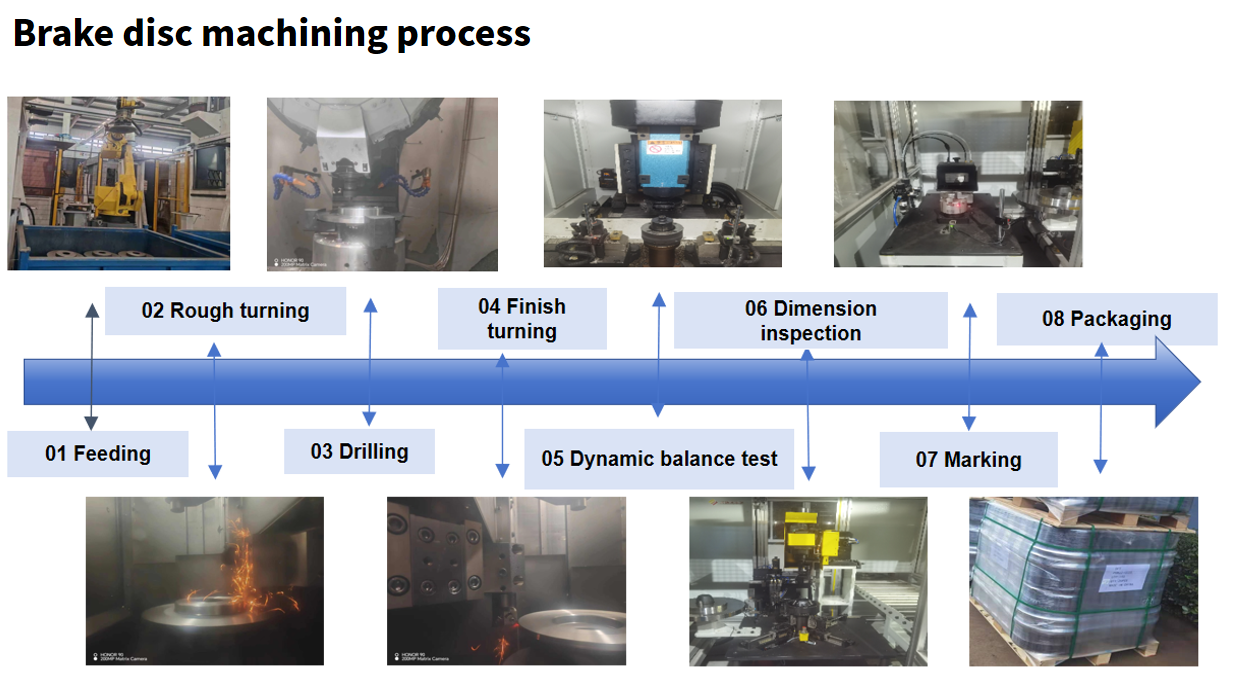
Full production flow: Iron charge preparation → Electric induction furnace melting → Spectrometric composition verification → DISA mold filling → Controlled cooling → Shot blast cleaning → CNC turning and precision boring → Balance check → Dimensional inspection → Surface treatment (zinc coating / e-coating per order specification) → Final inspection → Packaging
Worth mentioning: every melt batch is verified by optical emission spectrometry before pouring. If the carbon or silicon numbers fall outside spec, we adjust the charge — we don't pour and hope.
Learn about our full Brake Caliper product line →
IATF 16949 International Automotive Quality Management Standard →
4. Quality Certification & Testing Protocol
Jingyi Brake is IATF 16949, ISO 9001, and ISO 14001 certified.
IATF 16949 is the international automotive quality management system standard developed by the International Automotive Task Force (IATF). It defines quality system requirements specifically for automotive production and service part organizations — covering production consistency, traceability, defect prevention, and continuous improvement processes. It is not the same as ISO 9001. For any distributor targeting OEM assembly lines or Tier-1 supply chains, IATF 16949 is the minimum acceptable certification level.
Here's what that certification means in practice for your wavy rotor order:
Testing Conducted Per Batch:
| Test Type | Parameter Checked | Method |
|---|---|---|
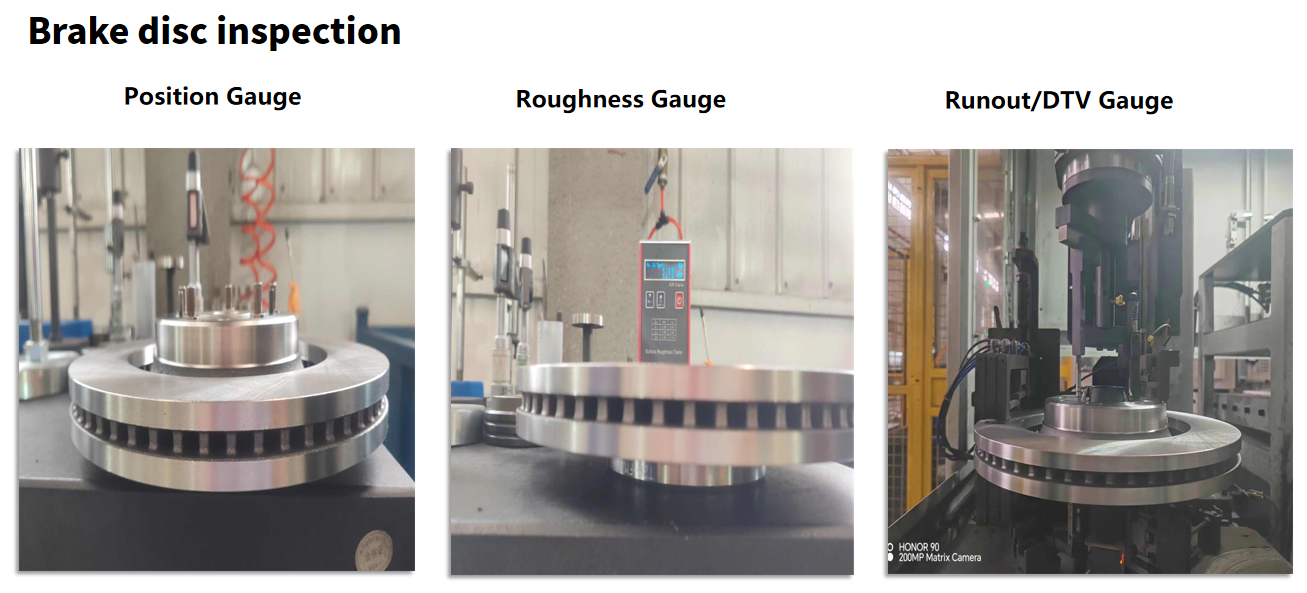
| Dimensional Inspection | Diameter, thickness, hub bore, hat height, bolt circle | CMM (Coordinate Measuring Machine) |
| Hardness Test | Brinell hardness (target: 187–241 HB) | Brinell hardness tester, min. 3 points per disc |
| Runout Check | Lateral runout ≤ 0.06 mm (DTV tolerance per OEM spec) | Dial indicator on lathe |
| Balance Check | Dynamic imbalance within OEM-specified tolerance | Dynamic balancing machine |
| Material Verification | C, Si, Mn, P, S composition | Optical emission spectrometry (OES) |
| Visual Inspection | Surface defects, porosity, cracks, finishing quality | 100% visual + sampling X-ray where required |
| Coating Adhesion | Zinc layer thickness and adhesion (where applicable) | Cross-cut adhesion test per ISO 2409 |
Every production batch carries a traceable batch number. If a quality issue surfaces in your market six months after delivery, we can pull the original melt record, molding parameters, and inspection report for that specific lot. That's the paper trail your customers — and their customers